Supporting patients with disabilities: Care that goes beyond the chart
Understanding the individual needs and dignity of patients with disabilities in healthcare settings.

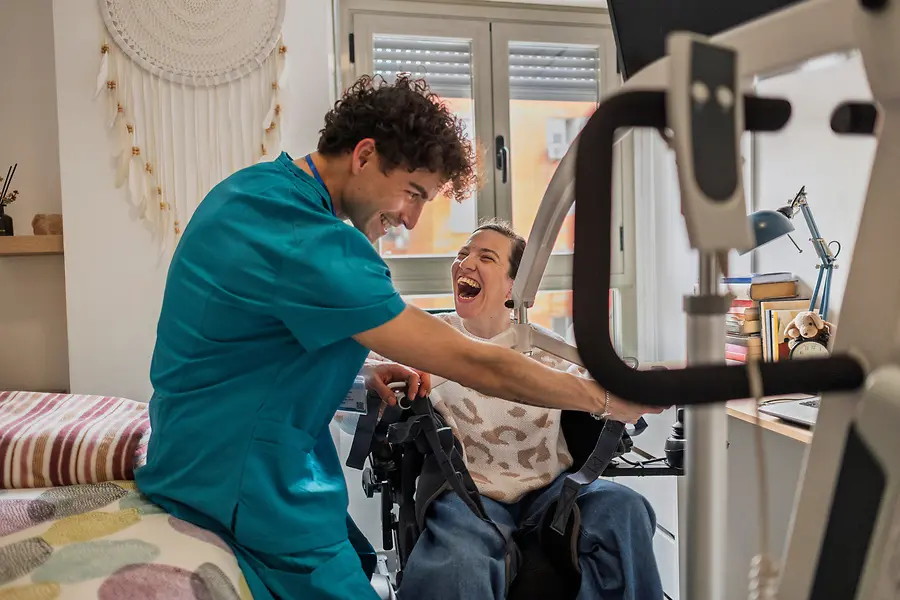
Caring for the Whole Person: Beyond the Diagnosis
Healthcare is often built around diagnoses, symptoms, medications, and treatment plans. But for patients with disabilities, meaningful care requires something more. It requires providers to recognize the individual behind the diagnosis and understand that disability can affect communication, independence, mobility, behavior, and the way a person experiences the healthcare system.
A medical chart may tell us what a patient has. It does not always tell us what that patient needs.
See the Person Before the Diagnosis
A disability should never become the first or only thing a provider sees.
Patients with disabilities have individual personalities, preferences, strengths, fears, abilities, and goals. Two people with the same diagnosis may require completely different approaches to communication and care.
Taking a few additional moments to understand the person—not simply the condition—can transform the healthcare experience.
Communication Should Be Adapted, Not Assumed
One of the most important lessons in disability-inclusive care is that communication may need to look different from patient to patient.
Some individuals may communicate verbally. Others may use assistive technology, gestures, communication devices, facial expressions, or the support of a caregiver. Some may need additional time to process questions or respond.
Healthcare professionals should avoid assuming that difficulty communicating means a lack of understanding.
Speaking directly to the patient, using clear language, allowing additional response time, and asking how the individual prefers to communicate can promote both dignity and independence.
When communication needs are respected, patients are more likely to feel heard rather than spoken for.
Caregivers Can Provide Valuable Insight
For patients who require substantial support, family members and caregivers can be an important source of information.
They may know the patient's baseline behavior, communication patterns, routines, preferences, and signs of discomfort. They may recognize changes that are difficult to identify during a brief appointment.
Listening to caregivers does not mean replacing the patient's voice. Instead, it can help providers better understand and support the patient while continuing to involve the patient as much as their abilities and preferences allow.
Independence Should Be Encouraged Whenever Possible
Good healthcare should not automatically mean doing everything for a patient.
Whenever appropriate, patients with disabilities should be encouraged to participate in their own care. That might mean choosing between options, answering questions independently, assisting with daily activities, or simply being given the time and space to do something for themselves.
Preserving independence can protect confidence, self-esteem, and dignity.
Sometimes the most supportive thing a healthcare professional can do is assist without taking over.
Behavior Is Communication
Behavioral changes can sometimes be misunderstood, particularly when a patient has difficulty communicating pain, fear, frustration, sensory overload, or other needs.
Instead of immediately labeling behavior as “difficult,” healthcare professionals should consider what the behavior may be communicating.
Is the environment overwhelming? Is the patient experiencing pain? Is there a change from their normal routine? Are instructions unclear? Is the patient frightened or unable to express what they need?
Looking beyond the behavior can reveal the underlying need.
Accessibility Is More Than a Ramp
Accessibility is often associated with physical accommodations, but true accessibility extends much further.
It includes communication, sensory considerations, scheduling, transportation, written information, technology, and the ability to understand and participate in healthcare decisions.
A healthcare environment can be physically accessible while still being difficult for a patient with a cognitive, developmental, sensory, or communication disability to navigate.
Inclusive care means asking: “What does this patient need in order to successfully participate in their care?”
Dignity Is Not Optional
Every patient deserves to be treated with respect.
That means speaking to adults as adults, protecting privacy, explaining procedures before performing them, respecting personal boundaries, and avoiding language that reduces someone to a diagnosis.
Disability may change how a person communicates, learns, moves, or completes everyday tasks. It does not diminish their humanity.
Care Beyond the Chart
The best healthcare professionals understand that the chart is only one piece of the story.
A diagnosis provides information. A patient provides context.
When providers combine clinical knowledge with patience, flexibility, communication, and genuine respect, they create an environment where patients with disabilities can feel safe and valued.
Healthcare should not require patients to fit into a system that was never designed with their needs in mind. Instead, we should continue working toward healthcare environments that adapt to the people they serve.
Closing Thoughts
Supporting patients with disabilities is not simply about providing accommodations. It is about recognizing ability alongside disability, listening before assuming, and creating opportunities for every patient to participate in their own care.
The goal should never be to see only what a patient cannot do.
The goal is to understand what they can do, determine what support they need, and make sure their voice remains part of the conversation.
Because excellent healthcare goes beyond treating a diagnosis.
It means caring for the whole person.