The Invisible Backbone of Care: Why Family Caregivers Must Be Recognized, Supported, and Included as Leaders of the Care Team
Family caregivers provide over $1 trillion in unpaid care each year, yet face financial strain, health risks, and systemic barriers — making caregiver support one of the most urgent healthcare priorities of our time.

America is in the midst of a profound demographic shift — one that is reshaping healthcare, families, and communities. For the first time in history, we are facing a reality where there are more older adults than younger people entering the workforce. The “silver tsunami” is no longer a projection; it is here.
Yet, at the very moment when the need for care is rapidly increasing, skilled nursing facilities are closing across the country, driven in part by changes in Medicare reimbursement for skilled care. These closures are happening at precisely the wrong time, reducing access to post-acute care and placing even greater pressure on families to absorb complex medical responsibilities at home.
Family Caregivers: The Invisible Pillar
Family caregivers are the single largest pillar of the long-term care system, providing more than $1.1 trillion in unpaid care annually. Without them, our healthcare system would not function. Yet despite their essential role, they remain underprepared, underrecognized, and unsupported (AARP & National Alliance for Caregiving, 2023).
The Family Caregiver: The Invisible Second Patient
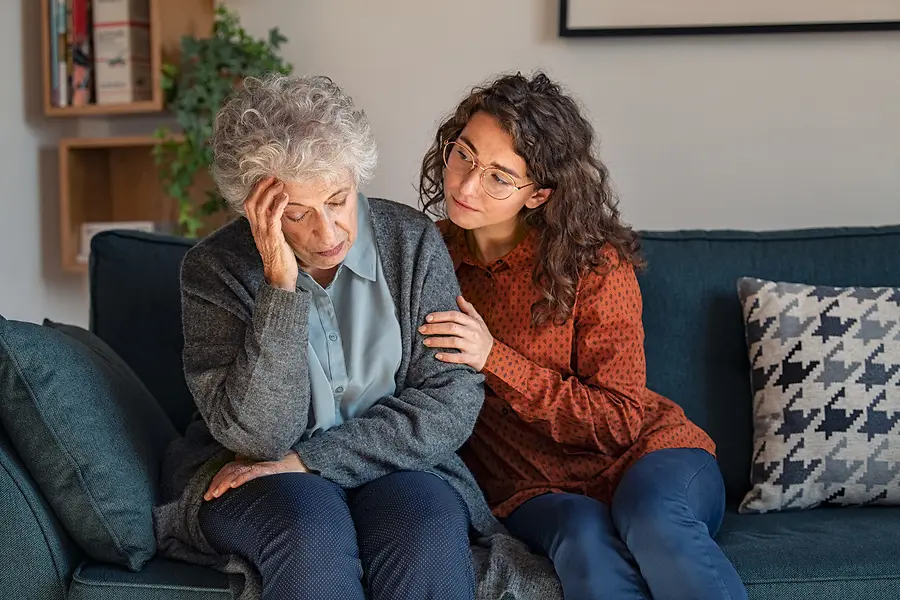
Caregiving is often described as an act of love, but it is also a significant health risk. Over decades in nursing, I have come to understand a sobering truth: family caregivers often become the invisible second patient. In my own work, I have lost two to three family caregivers to serious illness or death before the person they were caring for passes.
Caregiving is not just a role — it is chronic stress exposure that can shorten a caregiver’s life. Chronic stress, sleep deprivation, physical strain, and emotional exhaustion take a profound toll. Research shows caregiving stress is associated with an increased risk of cardiovascular disease, depression, and long-term health decline (Schulz & Sherwood, 2008). The impact can linger for years, with some studies suggesting effects can persist up to six years after caregiving ends.
The Financial Reality of Caregiving
Family caregivers in the United States spend an average of $7,242 annually out of pocket, covering housing, transportation, food, and medical supplies. These costs represent roughly 26% of a caregiver’s income, and for those caring for someone with dementia, expenses can approach $9,000 per year (AARP, 2021).
Caregiving is often a full-time job with part-time recognition and no paycheck. Many caregivers reduce work hours or leave the workforce entirely, creating long-term financial instability that can persist well beyond the caregiving years (Reinhard et al., 2019).
Healthcare Policy Changes and Increasing Pressure on Families
Changes in healthcare financing — including high deductibles, copays, and cost-sharing models — have shifted more responsibility onto families. Many cost structures were intentionally designed to deter overutilization, but the unintended consequence has been reduced access to necessary care (Rice et al., 2017).
Medicare Advantage plans may require daily copays ranging from $200 to $400 for skilled care, placing services out of reach for many older adults living on fixed incomes (MedPAC, 2023). We are asking families to perform complex medical care at home while simultaneously making care less affordable.
When Discharge Planning Fails Families
I recently worked with a patient who had a history of cardiac arrest resulting in brain injury, seizures, and frequent UTIs. A rehabilitation facility discharged her home as “independent,” despite 17 stairs to her bedroom and no home assessment. Within an hour, she fell. No RN was ordered. She was discharged with an active infection and no bedside commode and slept in a swivel chair because a hospital bed was not approved. Her husband was not included in discharge planning.
Unsafe discharges are increasingly reported as hospitals face pressure to reduce length of stay (Leppin et al., 2014).
The Human Cost of System Gaps
Max, diagnosed with multiple sclerosis and diabetic neuropathy, was discharged after surgery with undocumented pressure injuries. Within an hour of being home, he and his wife fell during a transfer, leading to emergency surgery.
Behind every unsafe discharge is a family left to manage medical complexity without training or support. Pressure injuries and post-discharge complications remain major causes of readmission when care transitions fail (CMS, 2022).
Why Caregivers Must Be Recognized as Leaders
Family caregivers are coordinators, advocates, and decision-makers. I encourage family caregivers to “wear a lab coat, carry a clipboard, and ask questions.” This empowers them to be seen as integral members of the care team. Including caregivers improves outcomes and reduces readmissions (Coleman et al., 2006).
The Crisis of Respite Care
Access to affordable respite care remains one of the greatest unmet needs among caregivers (National Academies of Sciences, Engineering, and Medicine, 2016).
Caregiving should never be a solo journey — yet millions of families are doing it alone.
Introducing the Caregiver Balance Guide
The Caregiver Balance Guide provides a framework built around four pillars:
- Boundaries and Support Plan
- Caregiver Relief Team
- Education and Expert Support
- Emergency and Care Preparedness
These pillars help caregivers move from crisis mode to sustainable care.
The Economic and Human Imperative
Family caregivers are essential infrastructure. Without them, long-term care systems would collapse. Investing in caregivers is not just compassionate — it is economically necessary.
A Call to Action
To address the caregiving crisis, we must:
- Include caregivers in care planning
- Expand affordable and ongoing respite care
- Support caregiver health
- Provide pathways for compensation
- Improve caregiver education
Moving Toward a More Humane System
Caregiving should not cost someone their health, livelihood, or future. By recognizing caregivers and supporting them with practical frameworks and policy change, we can build a system that honors both those receiving care and those providing it. The strength of our healthcare system depends on the well-being of those who care the most.
References
- AARP & National Alliance for Caregiving. (2023). Caregiving in the United States 2023. AARP Public Policy Institute.
- AARP Public Policy Institute. (2021). Valuing the Invaluable: 2021 Update.
- Centers for Medicare & Medicaid Services (CMS). (2022). Hospital Readmissions Reduction Program.
- Coleman, E. A., Parry, C., Chalmers, S., & Min, S. (2006). The care transitions intervention. Archives of Internal Medicine, 166(17), 1822–1828.
- Leppin, A. L., et al. (2014). Preventing 30-day hospital readmissions. JAMA Internal Medicine, 174(7), 1095–1107.
- Medicare Payment Advisory Commission (MedPAC). (2023). Report to the Congress: Medicare Payment Policy.
- National Academies of Sciences, Engineering, and Medicine. (2016). Families Caring for an Aging America.
- Reinhard, S. C., Feinberg, L. F., Houser, A., & Choula, R. (2019). Valuing the Invaluable: Update. AARP Public Policy Institute.
- Rice, T., Unruh, L., Rosenau, P., & Barnes, A. (2017). United States of America: Health system review. Health Systems in Transition.
- Schulz, R., & Sherwood, P. (2008). Physical and mental health effects of family caregiving. American Journal of Nursing, 108(9 Suppl), 23–27.