The Healing Power of Music, Story, and Poetry: A Family Medicine Perspective
How Music, Storytelling, and Poetry Become Clinical Healing Tools in Modern Medicine

As a Family Medicine physician, I have always believed that the best medicine is not always found in a pill bottle. For years, I have counseled patients about the profound and well-documented benefits of exercise on mood, cardiovascular health, metabolic function, and longevity. Physical activity remains one of the most powerful non-pharmaceutical tools we have. But it is far from the only one.
Today, I want to share something I find both exciting and deeply humanizing: a growing body of scientific evidence that the arts—specifically music, storytelling (narrative medicine), and poetry—are not merely comforting or pleasant, but genuinely therapeutic. These are not soft, anecdotal impressions. They are supported by meta-analyses, randomized trials, and outcomes studies published in leading medical journals.
I share this with my patients and colleagues not to replace evidence-based medicine, but to expand our understanding of what healing truly means.
Music as Medicine
Music has accompanied human healing rituals for millennia. What modern science has done is give us the tools to understand why—and to quantify its effects with clinical precision.
Pain Relief at Scale
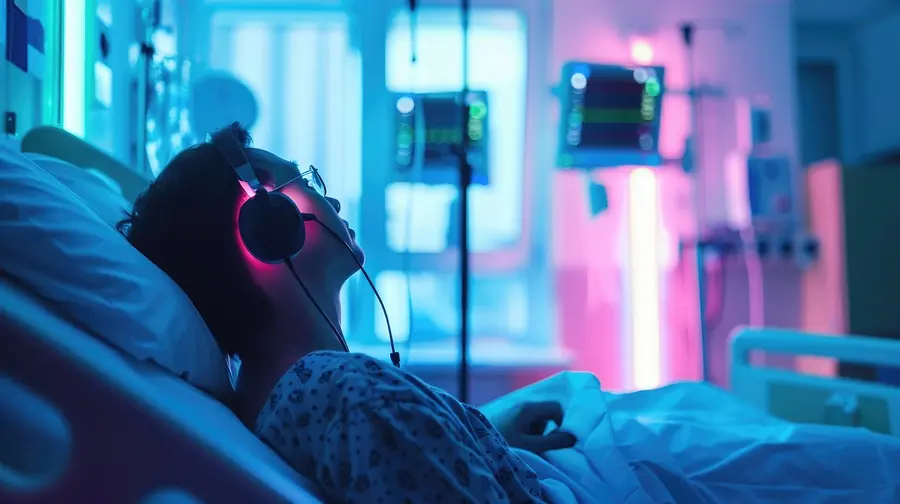
The evidence for music’s impact on pain is striking. A 2016 meta-analysis examining 97 randomized controlled trials involving more than 9,000 participants found that music-based interventions produced meaningful reductions in both pain intensity and emotional distress associated with pain, and were associated with decreased use of pain-relieving medications. A follow-up 2017 systematic review of 14 trials reinforced this, showing reductions in chronic pain across conditions including cancer, fibromyalgia, multiple sclerosis, and osteoarthritis. Notably, the effect was stronger when patients chose their own music—a reminder that agency and personal meaning amplify healing.
Stress Reduction: Medium to Large Effects
A 2022 meta-analysis of 47 studies and 2,747 participants measured music therapy’s effect on physiological and psychological stress. The result was an overall medium-to-large effect size (d = 0.72)—a magnitude that would be clinically significant for any pharmaceutical intervention.
Neurological & Hospital Applications
In patients with Parkinson’s disease, vibroacoustic therapy using low-frequency sound was found to reduce rigidity, improve walking speed, increase step size, and decrease tremor. In palliative care settings, live music therapy—including singing, instrument play, lyric discussion, and songwriting—brought measurable relief from persistent pain. In community hospitals, real-world retrospective data from 2017 to 2020 showed significant improvements in patient-reported pain, anxiety, and stress following music therapy sessions, as well as notably improved sleep in hospitalized patients.
Social Music: A 2026 Prescription
Most recently, researchers at Mount Sinai’s Louis Armstrong Center for Music and Medicine, in collaboration with musician Jon Batiste, published a framework for “social music” as a formal social prescription, particularly for patients experiencing or at risk for depression. This concept moves music from individual therapy into community-based wellness, recognizing that shared musical experience itself has measurable health value.
Narrative Medicine: The Healing Power of Story
Narrative medicine is the practice of bringing story—both the patient’s story and the clinician’s capacity to receive it—into the center of healthcare. It was formally developed at Columbia University by Dr. Rita Charon and is now taught in medical schools and practiced in hospitals worldwide.
At its heart, narrative medicine asks clinicians to shift from “the need to problem-solve” to “the need to understand”—a reorientation that research suggests meaningfully improves both patient outcomes and physician wellbeing.
Clinical Outcomes Across Multiple Conditions
Studies of narrative medicine interventions have demonstrated improvement in symptoms and suffering among patients with asthma, rheumatoid arthritis, heart failure, advanced cancer, diabetes, obesity, chronic pain, and psychogenic nonepileptic seizures. Measured outcomes have included improved quality of life, better medication adherence, fewer emergency room visits, reduced social withdrawal following trauma, and recovery of self-identity during illness and treatment.
Physiological Effects of Expressive Writing
Perhaps most surprising to the biomedically trained mind: writing about illness and stressful experiences produces measurable physiological change. Clinical studies have documented improved lung function in asthma patients and decreased disease activity in rheumatoid arthritis following structured expressive writing exercises. The act of narrating one’s experience appears to activate biological healing, not merely emotional relief.
Empathy, Communication, and the Doctor-Patient Bond
A 2024 paper in The Permanente Journal noted that narrative medicine sessions support the development of empathy and compassion in clinicians, in addition to improving doctor-patient communication and ultimately patient outcomes. We know that strong social relationships increase survival likelihood by 50%, and that loneliness and isolation are as harmful as smoking 15 cigarettes a day. Narrative medicine addresses this dimension of health directly.
Poetry: The Medicine of the Margins
Of the three arts discussed here, poetry may be the least familiar to a medical audience, and yet it may speak most directly to the spaces medicine struggles to reach: grief, loss, identity, and the unspeakable dimensions of illness and mortality.
What Research Shows
A 2025 systematic review and meta-analysis of 15 studies examined poetry-based interventions across a range of mental and physical health outcomes. The findings showed that poetry therapy produces meaningful benefits for PTSD, depressive symptoms, anxiety, and stress. Notably, this held across diverse formats—whether patients were reading poetry, writing it, or discussing it in therapeutic group contexts.
Earlier research had already confirmed positive treatment outcomes for poetry therapy in bibliotherapy, therapeutic writing, and group poetry settings, with particular evidence of clinical effectiveness in some populations. Researchers have also found that poetry activates specific brain regions involved in emotional processing, including the amygdala and nucleus accumbent—suggesting a neurological substrate for its affective power.
Poetry for Clinicians, Not Just Patients
The Journal of Pain and Symptom Management has described “poetic medicine” as a modality used for the healing of grief, loss, wounds of the psyche and spirit, and as a process for expanding resilience in healthcare, with particular relevance to hospice and palliative medicine, for both patient and clinician alike. In an era of physician burnout, the relevance of this is hard to overstate.
Honest Caveats
I believe in transparency with my patients and colleagues: the evidence base for poetry therapy, while promising, remains limited by small sample sizes and methodological variability. High-quality, pre-registered randomized controlled trials are still needed before poetry-based interventions can be formally recommended beyond an adjunctive role. I offer this as an invitation to explore, not a clinical mandate.
Physician’s Invitation
What strikes me about music, narrative medicine, and poetry is that they do not work by suppressing symptoms or correcting biochemistry. They work by engaging the whole person—restoring meaning, connection, agency, and voice to people who are suffering.
Modern medicine is extraordinarily powerful. It saves lives I could not have imagined saving when I began my training. But it can also reduce the person before us to a set of lab values and diagnostic codes. The arts remind us that our patients are more than their illness.
Exercise remains my first non-pharmaceutical recommendation. The evidence is simply unmatched. But I now tell my patients: listen to the music that moves you. Write down what you are going through. Read a poem that feels true. These are not distractions from healing. For many people, they are healing themselves.
References
Music & Pain (2016): Meta-analysis of 97 RCTs, 9,184 participants. Music-based interventions associated with reductions in pain intensity, emotional distress, and opioid use. NCCIH / Cochrane Review.
Music & Stress (2022): Meta-analysis of 47 studies, 2,747 participants. Medium-to-large effect size (d = 0.72) on stress outcomes. Nordic Journal of Music Therapy.
Music in Community Hospitals (2017–2020): EMMPIRE retrospective study. Real-world effectiveness of music therapy for pain, anxiety, stress, and sleep. Journal of Integrative Medicine.
Social Music (2026): Loewy et al. “Social Music as a Prescription for Maintaining Wellness.” Voices: A World Forum for Music Therapy. Mount Sinai / Louis Armstrong Center.
Narrative Medicine & Clinical Outcomes (2024): The Permanente Journal. Narrative medicine interventions associated with improved outcomes across asthma, RA, heart failure, cancer, diabetes, and pain.
Narrative Medicine & Physiology (2011): Fioretti et al. Narrative-based medicine review. Improved lung function in asthma; decreased disease activity in RA following expressive writing.
Poetry Therapy Meta-Analysis (2025): Systematic review of 15 studies. Significant reductions in PTSD, depression, anxiety, and stress. Psychiatry Research.
Poetry in Palliative Medicine (2022): Journal of Pain and Symptom Management. “Poetry as a Healing Modality in Medicine: Current State and Common Structures for Implementation and Research.”
This article reflects the author’s personal clinical perspective and synthesis of published research. It is intended for educational purposes and does not constitute individualized medical advice.