Boundary Setting as a Form of Self Respect
How a nervous system in crisis taught me that boundaries aren't about being cold—they're about finally coming home to myself.

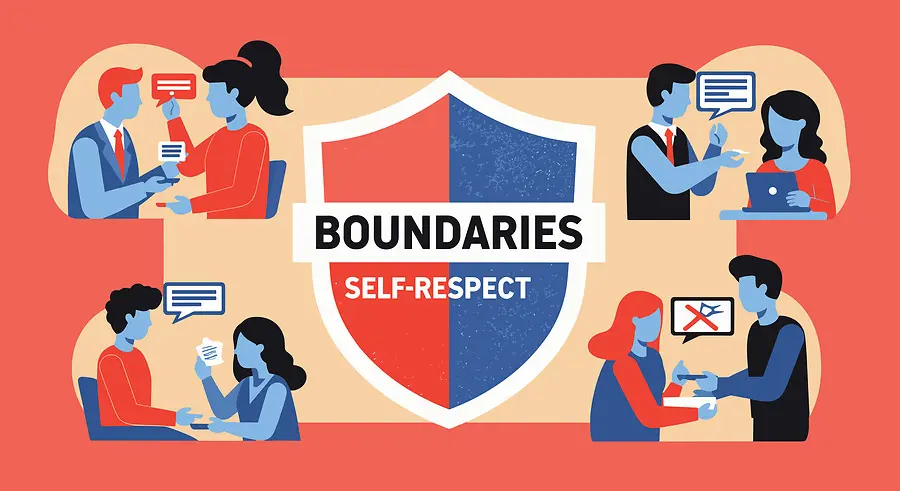
Boundaries Nearly Broke Me Before They Saved Me
I didn’t learn boundaries by reading a book.
I learned them by burning out, blowing up, disappearing, and finally collapsing.
For most of my life, I thought I was “bad at boundaries.”
Too nice. Too soft. Too emotional. Too much.
That story was wrong.
I wasn’t bad at boundaries.
My nervous system didn’t feel safe enough to have them.
When Saying No Felt Like a Threat
Growing up, boundaries weren’t respected—or even recognized.
Love was conditional. Attention was unpredictable. Safety depended on staying agreeable, quiet, helpful, or invisible.
So my body learned early:
Keep the peace.
Read the room.
Don’t need too much.
Don’t make it worse.
That turned into fawning so automatic I didn’t even know I was doing it. I said yes while my chest tightened. I agreed while my stomach dropped. I over-explained until I felt embarrassed for even having a need.
From the outside, I looked “kind.”
Inside, I was abandoning myself on repeat.
Boundaries Used to Trigger Survival, Not Strength
Every time I tried to set a boundary, my body reacted like I was in danger.
Heart racing.
Hands shaking.
Mind scrambling for the “right” words.
Sometimes I’d snap (fight).
Sometimes I’d avoid the conversation entirely (flight).
Sometimes I’d go numb and freeze.
Most often, I’d fawn—soften, smile, cave.
Then I’d hate myself afterward.
I thought something was wrong with me.
What was actually happening?
My nervous system believed boundaries would cost me connection—and connection once meant survival.
Regulation Changed Everything (Not Overnight, Not Gently)
It wasn’t until I started doing nervous system work—real, embodied, uncomfortable work—that boundaries stopped feeling like cliffs.
In treatment.
In recovery.
In the quiet aftermath when I could no longer outrun myself.
I learned something radical:
I didn’t need better scripts.
I needed a safer body.
When my system was dysregulated, no boundary stood a chance.
When I was regulated, even a little, clarity came online.
Boundaries stopped being emotional explosions or silent resentments.
They became simple. Firm. Boring, even.
That was new.
The First Honest Boundaries Were Messy
I won’t romanticize this part.
My early boundaries came out awkward.
Sometimes shaky.
Sometimes late.
Sometimes after I’d already said yes and had to circle back.
And the guilt? Brutal.
But here is the truth no one told me:
Guilt doesn’t mean you’re wrong. It often means you’re doing something unfamiliar.
My nervous system was recalibrating.
Safety felt strange.
Space felt dangerous.
I had to learn, slowly, that I could disappoint someone and survive. That I could be separate and still worthy. That I didn’t have to disappear to be loved. I didn’t have to abandon myself.
Boundaries Aren’t Walls. They’re Anchors.
Boundaries didn’t make me colder.
They made me more honest.
They stopped me from resenting people I never gave a fair chance to respect me.
They stopped me from negotiating with my limits.
They stopped me from using self-sacrifice as currency for belonging.
The more regulated I became, the less I explained.
The steadier I felt, the clearer my no became.
Not loud.
Not cruel.
Just grounded.
The Reframe That Changed My Life
Boundaries are not about control.
They’re not about being “strong.”
They’re not about pushing people away.
Boundaries are a nervous system skill.
They emerge naturally when your body believes:
I am safe.
I am allowed to take up space.
I will not die if someone is disappointed.
That belief isn’t intellectual.
It’s embodied.
Where I Am Now
I still feel it sometimes—that old tug to over-explain or smooth things over for comfort.
But now I notice it in my body first.
And that changes everything.
Because regulation gives me a pause.
And the pause gives me choice.