The Finite Repertoire: Beyond the Limits of Natural Immunity
How the Burke-Roberts Hypothesis and McKenna Mimicry Are Redefining Diagnostic Resolution

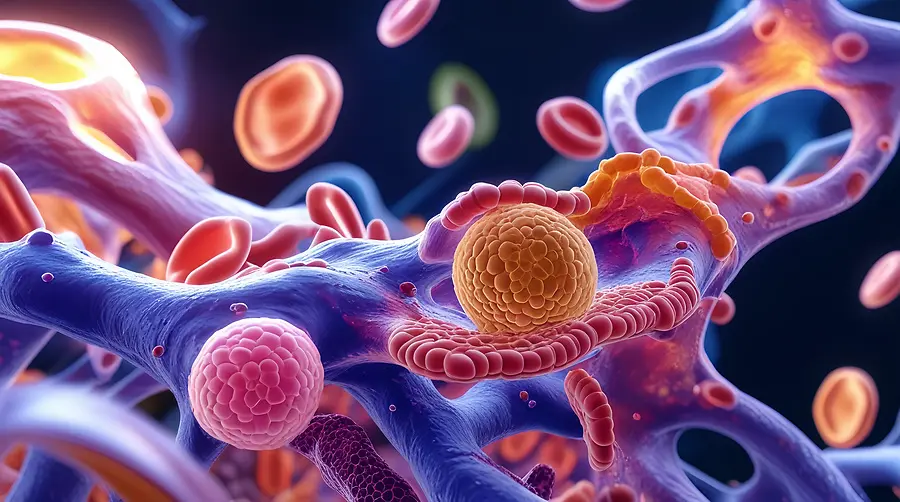
The Finite Repertoire: The Burke-Roberts Hypothesis and the Future of Diagnostic Resolution
The central dogma of diagnostic immunology has long relied on the assumption that the human immune system is a near-infinite library. We operate under the belief that for every antigen, there exists—or can be created—a corresponding antibody. However, the conceptual framework of the Burke-Roberts Hypothesis began with a simpler, more troubling question: What happens when the library runs out of books?
The Theoretical Gap: Genetic Recombination Failure
The hypothesis was born from observing the limitations of somatic recombination. While the body’s B cells are capable of extraordinary genetic shuffling to create diverse antibodies, they remain bound by the physical and structural constraints of biology. There are “blind spots”—molecular structures that are too small, too concealed, or too similar to “self” for the natural immune system to recognize or engage without risking catastrophic autoimmunity.
A key driver of the Burke-Roberts concept was the realization that many pathologies—specifically certain neoplasms and autoimmune disorders—thrive in a biological “uncanny valley.” These cells exhibit what we might call genetic recombination failure. They present surface markers that are nearly normal but subtly distorted.
Because natural antibodies are large, Y-shaped proteins designed for broad recognition, they often lack the structural dexterity to distinguish these subtle distortions. They see the “forest” of the cell surface but miss the “trees” of mutation. The hypothesis posits that this is not a failure of detection, but a failure of resolution.
The immune system, in this model, is trying to pick a lock with a sledgehammer. To diagnose and treat these conditions, we do not need a bigger hammer—we need a skeleton key.
The Diagnostic Resolution: McKenna Mimicry
If the Burke-Roberts Hypothesis defines the problem—that natural immunity has blind spots—then McKenna Mimicry represents the proposed diagnostic solution.
This concept necessitates a shift from natural antibodies to novel synthetic proteins, specifically aptamers. Unlike antibodies, which must be produced in living cells and are constrained by evolutionary biology, these synthetic molecules can be engineered with mathematical precision. They offer the theoretical capacity to bind within molecular gaps where disease has previously found shelter, mimicking the binding properties of antibodies without the biological limitations.
From Morphology to Molecular Intent
The application of McKenna Mimicry marks a fundamental transition in diagnostic pathology: a movement from morphology (what a cell looks like) to molecular intent (what a cell is doing).
By designing synthetic probes capable of navigating the “uncanny valley” of cell surface markers, pathologists may achieve granular visibility into specific immune cell populations—lymphocytes, macrophages, eosinophils, mast cells, basophils, and plasma cells—that have historically been difficult to differentiate at high resolution.
Under the Burke-Roberts framework, a diagnosis is no longer merely a label applied to a tissue pattern; it becomes a forensic reconstruction of immune system limitation. By using novel synthetic proteins to mimic the immune system’s recognition mechanisms—while refining them to bypass evolutionary blind spots—diagnosticians may be able to identify the potential for disease before it manifests as overt tissue damage.
This represents the realization of the hypothesis: a diagnostic tool capable of reading the “subtext” of cellular communication that natural antibodies were never evolved to perceive.