Hugo Bonatti, MD
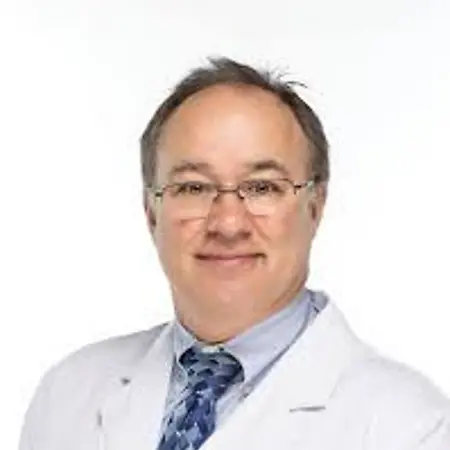
Dr. Hugo Bonatti is an accomplished attending surgeon and Associate Professor at the University of Maryland Medical Center in Baltimore, where he specializes in minimally invasive, bariatric, and robotic surgery. With decades of surgical experience spanning Europe and the United States, Dr. Bonatti has built a distinguished career dedicated to advancing surgical innovation and improving patient outcomes. His expertise includes laparoscopic and robotic procedures, surgical critical care, and the management of complex surgical infections.
Dr. Bonatti began his surgical career in Austria, where he became a fully licensed surgeon in 1995 and worked as a general and transplant surgeon. Originally planning to spend only a year in the United States for research, he ultimately chose to continue his medical journey there, completing extensive retraining and two fellowships before achieving full board certification in the United States in 2013. Throughout his career, he has served both major medical institutions and rural communities across Maryland, gaining broad experience while providing critical surgical care to underserved populations.
In addition to his clinical work, Dr. Bonatti is a prolific researcher and educator, having authored nearly 300 peer-reviewed publications focused largely on minimally invasive surgery and surgical infections. At the University of Maryland, he is actively redeveloping a bariatric surgery program while mentoring medical students and surgical residents. His current research explores expanding access to minimally invasive surgery in underserved regions, addressing emerging surgical infections, and improving nutritional outcomes for surgical patients, particularly those facing micronutrient and vitamin deficiencies.
• Medical School:
Innsbruck Medical University, 1986
• Residency:
Vanderbilt University School of Medicine, 2012 Innsbruck Medical university, 1995 Kings Colleg Hospital, 1996
• Fellowship:
University of Maryland Medical Center - Minimally Invasive Surgery, 2013 University of Virginia School of Medicine - Critical Care Medicine, 2008
• American Board of Surgery - Surgical Critical Care, 2019
• American Board of Surgery - Surgery (General Surgery), 2014
• 1992 Olympics - Freestyle skiing
• Surgical Infection Society
• American College of Surgery
• Southeastern Surgical Congress
• Society of Laparoscopic and Robotic Surgeons
Dr. Bonatti has published approximately 300 peer-reviewed articles. His publications cover a wide range of topics, with a significant focus on surgical infections and minimal invasive surgery. He mentioned that his work is available on Google Scholar and PubMed. His current research interests include three main areas: advancing minimal invasive surgery and making it accessible to underprivileged regions and rural hospitals, emerging surgical infections, and nutrition, particularly focusing on micronutrient and vitamin deficiencies in surgical patients. He has a particular interest in thiamine (vitamin B1) and vitamin C (ascorbic acid) deficiencies, especially after witnessing a patient die from undiagnosed scurvy approximately six years ago, which motivated his research into how highly processed foods lacking nutrients affect surgical patients' ability to heal.
Areas of Specialization/Expertise
- Minimal invasive surgery
- Bariatric surgery
- Robotic surgery
- Surgical infections
- Laparoscopic surgery
What do you enjoy most about practicing medicine?
What I enjoy most is getting more into education because I think we have a great responsibility to teach our medical students and residents. In surgery, we have a particularly difficult task because we have to teach them regular, good old open surgery, which is still the rescue. We have to teach them laparoscopic surgery, which is difficult enough. But then on top of that, now we also have to teach them on the robot console. It is challenging, but it can be done. I never regretted doing medicine, not a moment. Not a moment I regretted ever going into surgery. And it has developed, especially the past couple of years with the availability of robotic surgery, it's just fantastic. What inspired me initially was my interest in biosciences in high school, in anatomy, biology and chemistry. I also was very interested in foreign and old languages, particularly Latin, which is the basis of our medical language. I remember in 12th grade visiting the university where my brother was, and I caught a fantastic moment because they were dissecting brains. I was able to watch this, and despite the fact the formaldehyde smells and stings in your nose, it was so fascinating to me. I knew this is what I want to do. I was lucky enough getting to the medical university, and rest is history.