Ashley Lawrenz
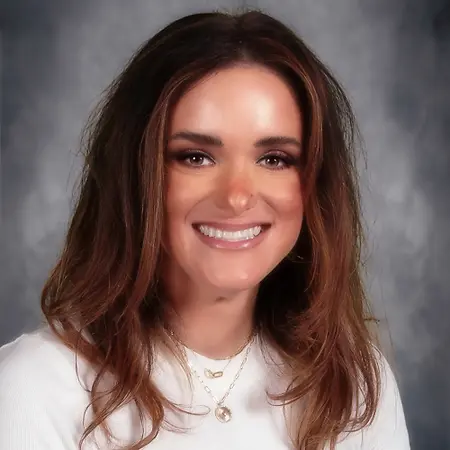
Ashley Lawrenz, RN, BSN, Paramedic
Ashley is a registered nurse and paramedic whose career is rooted in preparedness, prevention, and compassionate response during life’s most critical moments. She began her healthcare journey in rural emergency medical services in 2013, where decisive action, adaptability, and calm under pressure were essential to patient survival. “I didn’t set out to be a systems builder,” Ashley reflects. “I set out to help people on their worst days. In rural EMS, help was often far away, and hesitation could cost lives. You learn to assess, act, and stay grounded enough to bring others with you. That way of thinking, decisive, steady under pressure, never left me.”
In 2020, Ashley earned her Bachelor of Science in Nursing from Northern Illinois University, expanding her scope of care while maintaining her systems-based perspective shaped by paramedicine. This foundation informs her work across emergency, maternal, and community-based care settings, emphasizing readiness, efficiency, and patient safety.
Currently, Ashley works full time in school health, where she leads emergency preparedness efforts and protects children, staff, and families. She develops crisis response teams, implements proactive safety models, and conducts scenario-based emergency drills to strengthen organizational readiness and early intervention. Her dedication to prevention became tangible when she used a Stop the Bleed kit to save a student’s life, an experience that reinforced her belief that outcomes improve when people are trained, systems are prepared, and tools are accessible. That incident grew into a district-wide initiative placing kits in classrooms, training staff, and establishing the first school-based emergency crisis response team, later shared nationally as a model for cross-disciplinary collaboration.
In addition to school health, Ashley serves PRN as a labor and delivery and postpartum recovery nurse, providing clinical excellence and emotional support during some of the most vulnerable moments in a family’s life. She also maintains her paramedic license, continuing to serve rural communities where immediate hospital care is limited, ensuring she stays sharp across emergency and maternal care.
Ashley’s work exists at the intersection of preparedness, prevention, and protection, especially where children and families are most vulnerable. She believes that influence comes not from position or permission but from noticing gaps, caring enough to fix them, and building solutions that last. Guided by trauma-informed care, clinical expertise, and a commitment to sustainable safety frameworks, Ashley empowers communities to feel safe, seen, and capable long before crisis ever arrives.
• Bachelor of Science in Nursing (BSN) – Northern Illinois University
• Summa Cum Laude
• Advanced Cardiac Life Support (ACLS)
• Pediatric Advanced Life Support (PALS)
• Basic Life Support (BLS)
• Neonatal Resuscitation Program (NRP)
• STABLE Certification – Neonatal Care
• Pre-Hospital Trauma Life Support (PHTLS)
• Pediatric Education for Pre-Hospital Professionals (PEPP)
• School Nursing Care Certification
• Trauma-Informed Coach Certification
• Mental Health First Aid Certification
• Digital Threat Assessment & Advanced Digital Threat Assessment
• Certificate in Counseling Skills
• Mental & Behavioral Health Worker Certification
• A.L.I.C.E. Instructor
• School Nursing Emergency Care Certification
• Pediatric Disaster Triage JumpSTART Method Provider Certification
• Stop the Bleed Instructor
• Best Nurse in Ogle County 2024
• Critical Thinking Award 2023
• Stop the Bleed Ambassador Award 2023
• Grant Awardee 2023 IDPH $100,000 Mental Health Post Covid Recovery Grant
• Daisy Award for Extraordinary Nursing April 2021
• The Life Saving Award for Saving a Life November 2018
• ANA
• NASN
Prepared Before the Crisis
Building Systems That Save Lives Before an Emergency Begins
By Ashley Lawrenz, RN, BSN, Paramedic
Preparedness. Prevention. Protection. That’s where my work lives, especially where children and families are most vulnerable.
I didn’t set out to be a systems builder. I set out to help people on their worst days.
I began my career in rural emergency medical services, where help was often far away and hesitation could cost lives. There was no waiting for perfect conditions. You assessed quickly, acted decisively, and stayed calm enough to bring everyone else with you. That way of thinking, grounded, steady under pressure, never left me. It became the lens through which I understood care, safety, and responsibility.
In rural EMS, you learn early that when help is far away, sometimes you are the help. Minutes matter. Preparation matters. And the ability to lead calmly in chaos can change outcomes forever.
That mindset followed me into labor and delivery nursing, where I witnessed the same truth from a different perspective. When teams are prepared, communication is clear, and caregivers feel supported, fear softens. Safety feels real. Outcomes improve, not just clinically, but emotionally. Preparation doesn’t remove uncertainty, but it creates trust, and trust changes everything for families during some of the most vulnerable moments of their lives.
That path eventually led me into school health, where I realized something that surprised even me: the most powerful emergency response is the one that never has to happen at all.
The moment that clarified this work came when I used a Stop the Bleed kit to save a student’s life. There wasn’t time to debate roles or wait for additional resources. The training was there. The tools were accessible. The response worked. The outcome changed before a hospital ever entered the picture.
That experience didn’t make me feel heroic.
It made me certain.
When people are trained, systems are prepared, and tools are within reach, outcomes improve long before crisis escalates. That’s prevention in action.
That certainty pushed me to ask a better question: Why isn’t this level of preparedness everywhere people gather?
Especially in schools.
In school health, particularly in rural communities, I see the downstream effects of fragmented systems every day. Schools are asked to manage medical emergencies, mental health crises, and life-threatening events without being built for rapid response. That isn’t a failure of care or commitment. It’s a failure of infrastructure.
So my work shifted from reacting to building.
I focus on translating healthcare logic into school environments: clear roles, rapid decision-making, prevention-first thinking, accessible tools, and sustainable funding. This work has included placing Stop the Bleed kits and Emergency Preparedness kits in classrooms, training educators and staff, conducting scenario-based emergency drills with, and helping build our district’s first Emergency Crisis Response Team (ECRT).
The following year, we faced another life-or-death emergency, this time involving early detection, CPR, and an AED. Because the systems were already in place, another life was saved.
Those moments weren’t isolated incidents.
They were proof of concept.
What began as a single response grew into a sustainable model for school safety, one rooted in preparedness rather than panic, and was later shared nationally as an example of cross-disciplinary collaboration.
Since 2023, I have secured over $100,000 in grant funding to support mental health initiatives, post-COVID recovery, and emergency preparedness because burnout isn’t a funding model, and advocacy without sustainability isn’t leadership. It's risk.
Beyond my own district, I mentor other nurses in grant writing and program development, helping build systems that last and amplifying impact through shared leadership.
A consistent thread runs through all of my work, from EMS to obstetrics to school health: the earliest opportunity to protect children is by protecting the adults who care for them. When caregivers are trained, supported, and resourced, children are safer by default.
Preparedness and compassion are often treated as opposites.
They aren’t.
Preparedness is compassion…expressed early enough to matter.
Outside of clinical work, I also coach 7th and 8th grade boys’ basketball, using sports as a platform to teach connection, resilience, and mental health awareness. The same values that ground my medical work, empathy, teamwork, readiness, shape my coaching.
Whether I’m in a classroom, a clinic, a gym, or a crisis, my mission is the same: to help people feel safe, seen, and capable of responding when it matters most.
When people ask what I hope others take from my story, my answer is simple. Influence doesn’t come from position or permission. It comes from noticing gaps, caring enough to fix them, and building solutions that last.
My work isn’t about reacting better.
It’s about building systems that make reaction less necessary and building systems proactively that ultimately saves childrens' lives.
Article by--Ashley Lawrenz, RN, BSN, Paramedic
Areas of Specialization/Expertise
- Advanced life support and emergency response (ACLS, ALS, BLS)
- Pediatric and neonatal emergency care (PALS, NRP, STABLE, PEPP)
- Trauma and pre-hospital care (PHTLS, pediatric trauma support)
- Neonatal stabilization and critical care transport preparation
- School and community-based nursing care
- Mental and behavioral health support
- Trauma-informed care and coaching
- Crisis intervention and mental health first aid
- Digital threat assessment and violence prevention
- Counseling support skills and patient advocacy
- A.L.I.C.E. Instructor
- Paramedic
- Registered Nurse
- Labor, Delivery, Recovery, Postpartum Nurse
- Public Health
- Grant Writing
- Leadership
- IEP & Special Education
- Preceptor
What do you enjoy most about practicing medicine?
What I enjoy most about practicing medicine is the ability to make a meaningful difference when it matters most. Whether that’s in a crisis or by preventing one altogether. I value being able to assess a situation clearly, act decisively, and bring calm and structure to moments that are often overwhelming for patients and families. Over time, what’s become most rewarding is recognizing patterns and gaps and helping build systems that make care safer, more effective, and more compassionate before emergencies occur. Medicine gives me the opportunity to combine clinical skill with preparation, education, and advocacy so people feel supported, capable, and protected...not just treated. Helping others feel safe, seen, and confident in moments of uncertainty is what keeps this work meaningful for me.
Locations
School Nurse
Rock Falls, Illinois 61071