Beyond Implants: How "McKenna Mimicry" and Aptamers are Rewriting the Aesthetics Playbook
How Aptamers and McKenna Mimicry Are Redefining Hair Restoration and Aesthetic Medicine at the Molecular Level

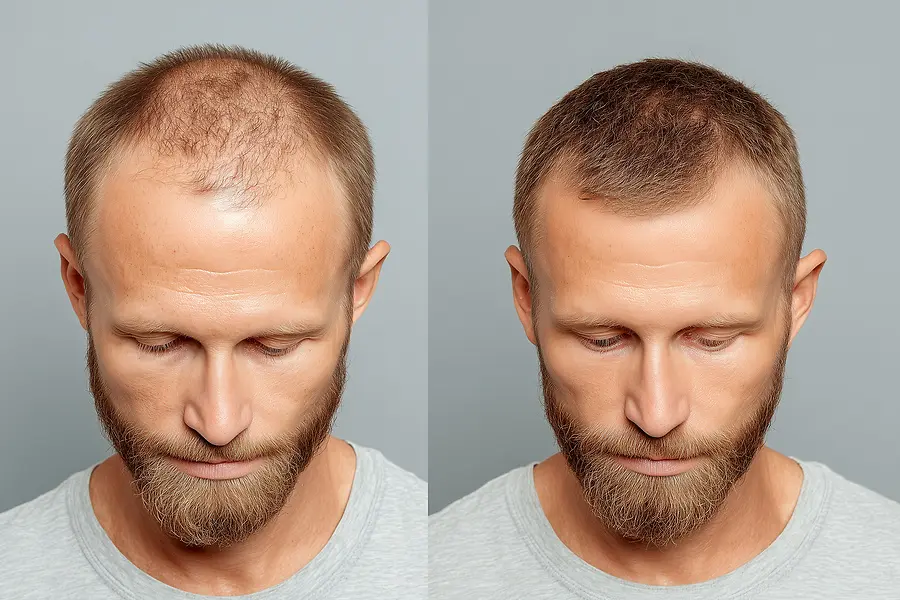
Forget follicular unit extraction. Forget the endless cycle of minoxidil dependency. We are on the precipice of a seismic shift in regenerative aesthetics—one that moves beyond simple replacement toward sophisticated molecular instruction.
The future isn’t just about growing hair; it’s about commanding the biology of the follicle itself using a principle we call McKenna Mimicry, executed by programmable, high-affinity molecules known as aptamers.
This isn’t just the “best in medicine”; this is the medicine that redefines what “best” means.
The Core Challenge: The Unresponsive Scalp
Hair restoration, particularly following synthetic fiber implantation, faces a critical bottleneck: the environment. Implants are foreign objects. Even when technically successful, the scalp often mounts a localized, chronic inflammatory response—a low-grade “rejection” that suppresses the very regenerative pathways needed to maintain both the implant and the surrounding natural hair. Traditional topicals often aggravate this response through harsh chemical delivery systems or a sheer lack of target specificity.
We need a way to stabilize this environment, silence the immune “alarm,” and simultaneously reboot the dermal papilla.
The Aptamer Revolution: From Target to Blueprint
Aptamers, often dubbed “chemical antibodies,” are synthetic single-stranded DNA or RNA molecules that fold into highly complex three-dimensional structures. They bind to specific protein targets with a precision that can rival monoclonal antibodies, yet they are smaller, more stable, and, crucially, typically non-immunogenic.
Using AI-accelerated SELEX (Systematic Evolution of Ligands by Exponential Enrichment), we can generate aptamers in silico to target the precise molecular triggers of hair loss.
We aren’t just trying to “grow hair.” We are:
- Engineering the M1-to-M2 Macrophage Shift: Using aptamers as IL-4 agonists to switch the scalp environment from inflammatory (rejection mode) to regenerative (healing mode).
- Disabling the Anagen “Brakes”: Creating aptamers that block the CXXC5–Dvl1 interaction, overriding natural inhibitory signals and keeping follicles locked in the growth phase.
This isn’t about inhibiting a pathway. It’s about simulating a better one. This is the essence of McKenna Mimicry.
The Power of McKenna Mimicry: Biomimicry’s Intelligent Evolution
Traditional biomimicry is passive; it copies natural forms or materials. McKenna Mimicry is active; it replicates natural signaling.
In hair restoration, this means creating an aptamer that doesn’t just bind to a receptor but acts like the desired endogenous protein (e.g., TGF-β2 or Wnt). The immune system doesn’t see a foreign drug; it recognizes familiar biological signaling.
This strategy achieves:
• Minimal Off-Target Effects: The AI-designed “lock-and-key” fit ensures the aptamer interacts primarily with the scalp’s regenerative signals rather than unintended systemic targets.
• Programmable Neutralization: Because aptamers are DNA or RNA, a complementary “antidote” strand can be administered to silence the active molecule if needed—providing a built-in safety mechanism.
• Barrier Integration: When combined with a cold-process phytolipid base (using lecithin instead of ethanol), the aptamer aligns with the skin’s lipid bilayer, supporting deeper follicular penetration without disrupting the scalp’s critical acid mantle.
The Engagement Factor: Aesthetics Writ Large
The implications of this technology extend far beyond the synthetic fiber interface. McKenna Mimicry, catalyzed by aptamers, unlocks the broader spectrum of aesthetic medicine.
Think bigger than hair:
1. The End of Inflammation in Post-Surgical Healing
Aptamers that mimic anti-inflammatory cytokines could be applied topically after facelifts or laser resurfacing, potentially reducing downtime and scar formation by guiding tissue to heal with less redness and fibrosis.
2. Programmable Skin Elasticity
Imagine an aptamer designed to mimic the binding activity of decorin, a protein that regulates collagen fibrillogenesis. This could enable clinicians to influence collagen density and organization from the outside in, addressing skin laxity through targeted topical application.
3. Precision Pigment Management
Instead of “bleaching” the skin—which is often cytotoxic—aptamers could mimic natural signals that encourage melanocytes to enter a quiescent (resting) state, offering a more refined approach to treating melasma and hyperpigmentation with minimal irritation.
The Aesthetic Imperative
The future of medicine isn’t about doing more with higher doses; it’s about doing better with smarter signals. McKenna Mimicry and aptamers provide the vocabulary for that new biological conversation.
For the high-level aesthetic professional, this isn’t just technology to watch; it is technology that may define clinical innovation in the decade ahead.